Spider Fighter 2
- 4.5
- Rating
- 100.00M
- Installs
- Free
- Price

 Analysis by App-foxy
My first few sessions with Spider Fighter 2 made its intention clear: this is a compact action game built around the fantasy of taking on criminals in a large urban setting. It does not ask me to study a complicated rulebook before the first fight. Instead, it puts the emphasis on movement, attacks, quick reactions, and the pleasure of clearing a street encounter with a superhero-like character. That directness is a big part of its appeal.
The game is free to download, and Starplay FZCO presents it as a mobile action experience for players who want fighting rather than a slow role-playing campaign. It has a Teen content rating, runs on Android 6.0 or later, and the current version is 2.43.0. Those details make it accessible to people using older compatible devices, although the actual comfort of play will still depend on screen size, touch response, and how well a phone handles action scenes.
I can understand why it has reached more than 100 million installs and earned an average rating of 4.5 from around 401 thousand ratings. That level of attention suggests a wide audience for its simple promise: step into a city, face gangsters, and fight your way through the action. Still, popularity does not remove the need to ask whether the moment-to-moment combat is satisfying enough for you. In my experience, the answer depends heavily on whether you enjoy short, energetic battles more than deep combat systems.
You May Also Like

 Pandora - Music & Podcasts
Pandora’s Music Is Easy to Start, but Harder to Recover
Pandora’s strength is its low-effort path from a seed to a station. Its weak spot is how much confidence it asks you to place in connection, setup, and quiet recovery.

 8 Ball Pool
 Is Built on Rivalries, Rematches, and Routine
A close look at the rivalries, rematches, shared routines, and unanswered safety questions that turn a quick pool match into a persistent mobile community.

 Samsung Music
’s Quiet Strength Is Playing What You Already Own
Its reach comes less from spectacle than from dependable access to a personal library. That simplicity is both the app’s strongest retention engine and its ceiling.

 AccuWeather: Weather Radar
AccuWeather Review: A Quick, Clear Forecast for Everyday Decisions
For everyday plans, the best forecast is the one you can understand quickly. AccuWeather makes rain timing, radar, and local conditions easy to act on, with a few trade-offs.

 Hill Climb Racing
Why Hill Climb Racing Still Turns Crashes Into One More Run
A tiny car, a bumpy hill and one more upgrade: Hill Climb Racing keeps resurfacing because its simple chaos makes every near-miss feel personal.

 AliExpress - Shopping App
AliExpress Makes Global Shopping Feel Personal, but Shoppers Bear the Risk
AliExpress turns a global marketplace into a pocket-sized discovery engine. Its reach is useful, its shopping loop compelling, and its trade-offs easy to miss.
More From Our News Desk
View All News


First impressions: an urban superhero mood built for quick sessions
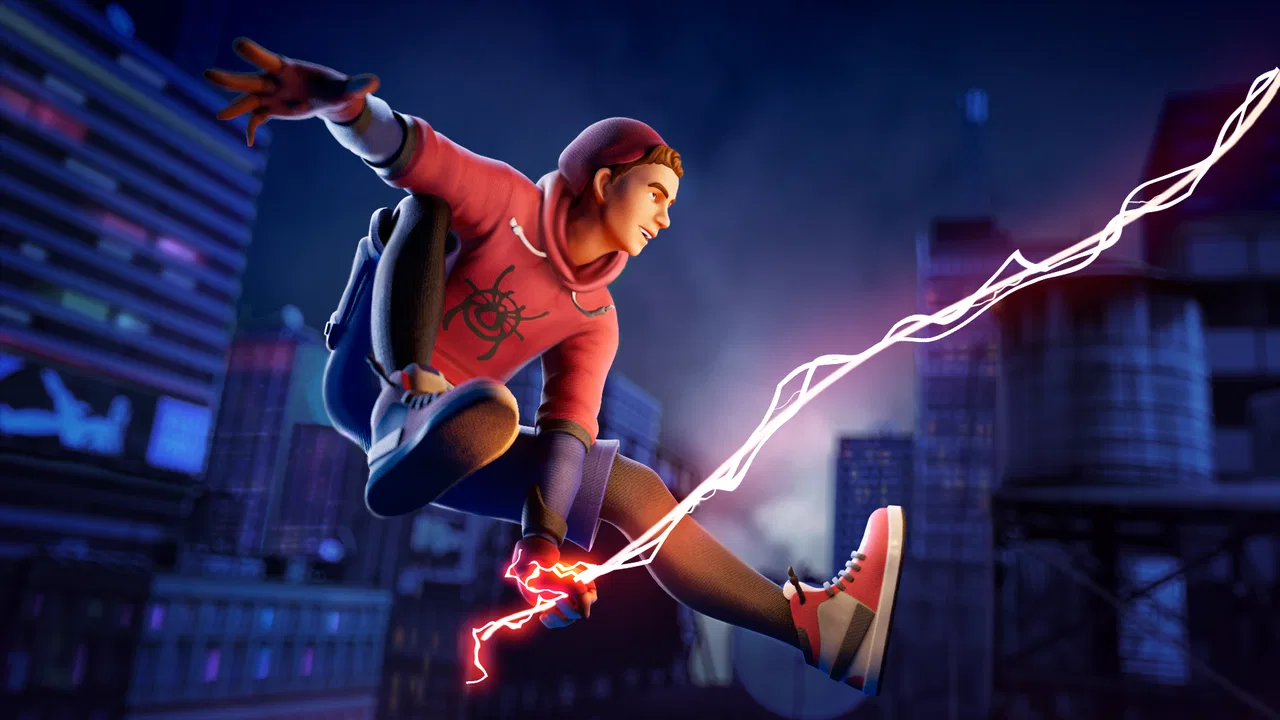
The strongest early impression is visual rather than narrative. The city streets create a recognizable stage for the action, with the hero and opponents placed in a setting that feels more like a comic-book crime zone than a realistic simulation. That choice helps the game communicate its tone quickly. You are not entering a quiet puzzle world or a military battlefield; you are stepping into a stylized urban confrontation where every encounter is meant to feel immediate.
I like that the setting gives the fights a clear identity. A bare arena could support the same basic punches and dodges, but streets, buildings, and criminal opponents make the action feel connected to the character’s role. The environment is not just decoration in my mind. It frames each battle as a small intervention in a troubled city, which gives the repeated encounters a little more purpose.
The opening experience is also approachable for players who are new to mobile fighting games. The central idea is easy to understand, and the controls do not require the kind of long memorization associated with a traditional console fighting game. That makes it suitable for a quick break, especially when I want action without committing to a large open-world adventure or a lengthy story chapter.
There is a trade-off here. A straightforward design can be welcoming, but it may feel limited to players who want complex combos, carefully balanced competitive play, or a large amount of character customization. I would not choose this as my first recommendation for someone looking for a serious fighting-game substitute. I would choose it for someone who wants a superhero-flavored brawler that gets to the point.
The free entry point matters too. You can try the core experience without paying upfront, while optional purchases range from $0.99 to $14.99 per item. I would approach those purchases cautiously. The most sensible way to judge the game is to play enough free content to decide whether the combat loop itself is enjoyable before spending money on progress or convenience.
What the first sessions reveal about pacing
Spider Fighter 2 works best when I treat each session as a sequence of focused bursts. The action is easier to appreciate when I am looking for a few minutes of active play rather than expecting a long, cinematic adventure every time I open it. The urban setting supplies the mood, but the combat supplies the reason to stay. If a fight feels responsive, the short-session structure becomes a strength; if the controls feel imprecise on your device, the same structure can expose the repetition more quickly.
One useful habit is to play the first sessions with attention to timing instead of simply tapping as fast as possible. Mobile action games can encourage frantic input, but watching enemy movement and choosing when to attack makes the encounters feel more deliberate. This is one of the easiest ways to find out whether the game has enough mechanical appeal for you beyond its superhero presentation.
World language: how the city supports the action
The game’s world communicates through familiar action imagery: city streets, hostile groups, and a central fighter who stands between ordinary urban life and criminal violence. It is a readable setup, and that readability helps the game avoid unnecessary explanation. I do not need a dense fictional history to understand what a street encounter is trying to make me feel.
That simplicity also shapes the emotional tone. The city is less a place I explore for its own sake and more a stage that gives context to the fights. This is important when comparing it with open-world superhero games. Those larger alternatives usually make travel, discovery, side activities, and narrative progression major parts of the experience. Here, the streets mainly support the action loop, so the world feels focused rather than expansive.
I found that focus useful when I wanted to play without managing too many systems. There is a certain comfort in knowing that the environment is there to reinforce the next confrontation. At the same time, players who expect a city full of meaningful interaction may find the setting less rewarding. The word “city” can suggest freedom, but this game’s urban identity should be understood primarily as atmosphere around combat, not as a promise of a detailed simulation.
The art direction helps maintain a coherent playable mood because it keeps the hero-versus-gangsters idea visible. The character design and street context point in the same direction, so the game does not feel like a collection of unrelated levels. Even when the action is simple, the visual language keeps reminding me why the fights belong in this particular world.
Why the setting matters more than its size
A useful way to approach the game is to judge the city by how well it frames encounters rather than by how much territory it contains. In that respect, the setting succeeds when it makes a basic fight feel like part of a larger urban problem. The streets give the player a role, and that role makes repeated brawls easier to accept.
My practical advice is to avoid comparing the environment directly with a full console-style open world. That comparison will make the game seem smaller before you have considered its real goal. Compare it instead with other mobile action titles that use a strong theme to make short battles more inviting. Against that group, the crime-filled city and superhero presentation give it a clear personality.
Sound and rhythm: keeping the streets in motion
The audio presentation works best as a support system for the visual mood. In an action game like this, sound needs to make attacks feel connected to the screen and help separate a quiet moment from a clash. I paid attention to how the rhythm of a session changed when enemies appeared, when I began attacking, and when the encounter moved toward its conclusion. The result is a game that wants to feel active rather than contemplative.
That rhythm is especially important because the story premise is simple. Without a deep narrative constantly pushing forward, the sense of momentum has to come from the fights themselves. Visual impact and combat sounds work together to make a short encounter feel like a complete event. When the timing clicks, I get the satisfying impression of entering a street, dealing with a threat, and moving on before the energy fades.
There is also a practical reason to appreciate the compact rhythm. I can play during a short break without needing to remember a complicated plot or reconstruct a large quest chain. The game’s mood is immediate: urban danger, fast response, and a fighter moving through trouble. That makes it a better fit for casual action sessions than for players who want a quiet, story-heavy experience.
However, a strong action rhythm can become tiring if the underlying encounters do not keep offering meaningful variation. This is where personal taste matters. If you enjoy repeating a familiar combat pattern while improving your execution, the steady pace can be relaxing. If you need every stage to introduce a new mechanic or dramatic surprise, the presentation alone will not be enough to maintain interest.
A small-screen listening strategy
I recommend playing with enough volume to understand the action cues, but not so loudly that the sound becomes tiring during repeated encounters. On a phone, audio can easily turn into background noise when the player is concentrating on touch controls. Paying attention to the relationship between an attack and its sound response can help you notice whether you are reacting with intention or simply tapping through a sequence.
Playing with headphones can make the atmosphere more focused, but it is not essential for understanding the game. The important point is that sound should complement the street setting without becoming the only source of excitement. If the visual rhythm and combat decisions are working, the audio reinforces the mood. If they are not, louder sound will not solve the underlying problem.
Mechanical fit: where the action earns its place
The most important question is whether the fighting feels good enough to support repeated play. For me, the answer begins with accessibility. The game presents its action in a form that is easy to pick up, which makes it a reasonable choice for people who do not normally play complex fighting games on mobile. You can focus on the immediate threats instead of learning a large competitive command system.
That accessibility is not the same as depth. A player who wants frame-perfect competition, a broad roster with radically different play styles, or a carefully structured tournament experience should look elsewhere. Spider Fighter 2 is better understood as an action brawler with a superhero skin and an urban mission fantasy. That does not make it inferior; it simply sets the right expectations.
One of the more useful ways to play is to separate progress from button speed. Rather than rushing every exchange, I try to identify which opponents create the most pressure and deal with them before becoming surrounded. This approach turns the streets into a positioning problem as well as an attack sequence. It is a small adjustment, but it makes the combat feel less like random tapping and more like controlled crowd management.
Another practical tip is to use the early part of a session as a calibration period. Touch controls can feel different depending on the phone, screen protector, and how you hold the device. I take a moment to learn how far my thumbs need to move and whether the display feels comfortable before judging the game’s responsiveness. A control layout that works well on a large screen may feel cramped on a smaller one, so device fit is a genuine part of the experience.
I also recommend resisting the urge to spend immediately on in-app items. Since the game is free and purchases are available individually, the best test is whether you enjoy the base loop when progress is earned through play. Spending can make sense for a player who already likes the game and wants to support continued use, but it cannot turn an unsuitable combat style into a suitable one.
Who will enjoy the combat most?
This is a good match for players who like comic-book action, street fights, and sessions that can begin quickly. It is also useful for someone who wants a less demanding alternative to a full fighting game. The Teen rating makes it more appropriate for older children and adults than for very young players, and parents should consider that rating alongside the action-focused presentation and optional purchases.
I would be more hesitant to recommend it to someone who mainly plays for story, exploration, or social competition. The city theme may attract those players at first, but the central appeal remains fighting. Likewise, if you dislike repeating combat encounters or prefer games where every session introduces a radically different challenge, the straightforward structure may lose its charm.
Compared with endless runners, it offers more direct confrontation and a stronger hero fantasy. Compared with role-playing games, it asks for less inventory and character-management attention. Compared with traditional fighting games, it is easier to enter but less suited to players seeking a highly technical duel. Those comparisons explain its best position: a convenient mobile brawler between casual action and dedicated fighting.
A realistic everyday use case
Imagine having a short wait before an appointment. You want something more active than scrolling, but you do not want to begin a long mission that will punish you for stopping halfway through. This is where the game makes sense. I can open it, complete a focused street-fighting session, and put the phone away without needing to preserve a complicated story state in my head.
It also works after a stressful day when I want a clear objective. The game gives me an obvious task and immediate feedback, which can be more satisfying than a slow strategy title when my attention is limited. The downside is that this same directness may feel shallow during a long uninterrupted session. I would use it in bursts, not as my only game for an entire evening.
Atmosphere verdict: a focused brawler with clear boundaries
What stays with me is the way the art direction, street setting, sound, and pacing all support the same fantasy. Spider Fighter 2 wants me to feel like a fast-moving fighter cleaning up trouble in a stylized city. Its mechanics are not hidden behind a complicated interface, and its presentation does not fight against its central purpose. That coherence is more valuable than a long list of disconnected features.
The game is not the right choice for every action fan. Its free-to-play structure includes optional purchases from $0.99 to $14.99 per item, so players who dislike any form of spending pressure should remain disciplined and decide in advance whether they will play without buying. The combat may also feel repetitive to people who demand deep variety, and the city should not be mistaken for the kind of fully interactive open world found in larger games.
Still, I think it earns a place on an Android device for the right audience. It supports older compatible systems beginning with Android 6.0, and Starplay FZCO has built an experience whose identity is easy to understand within minutes. The broad reach of over 100 million installs and around 3.1 thousand written reviews reflects how accessible the concept is, while the 4.5 average gives potential players a useful sign that many people find the formula enjoyable.
My final recommendation is simple: try it if you want short, energetic superhero action and you are comfortable judging the game by its combat loop rather than by the size of its world. Give the controls a fair test, play without rushing to purchase anything, and notice whether the street atmosphere makes repeated fights enjoyable. Its biggest strength is the unity between mood and mechanics; its biggest limitation is that this focused formula may not provide enough depth for long-term specialists.
For me, that balance makes it an easy game to recommend casually, with an important condition: treat it as a mobile action brawler, not as a complete superhero life simulator or a replacement for a technical fighting game. When approached on its own terms, the city, sound, and steady combat rhythm create a convincing little escape into street-level heroics.
FAQs for Spider Fighter 2
01What is Spider Fighter 2?
Spider Fighter 2 is a fast-paced action fighting game for mobile devices. You control a superhero-style character who battles waves of criminals and powerful enemies across different city environments. The game focuses on simple touch controls, quick movement, combo attacks, special abilities, and boss fights. It is designed for short, entertaining sessions rather than a complex story-driven campaign.
02How do you play Spider Fighter 2?
Gameplay is based on moving around the arena, attacking nearby enemies, avoiding incoming hits, and combining punches, kicks, and special powers. The controls are generally easy to understand, making the game accessible to casual players, although later stages require better timing and positioning. Learning when to attack, dodge, and activate abilities is important because enemies become stronger and appear in larger groups.
03Is Spider Fighter 2 free to download and play?
Spider Fighter 2 can generally be downloaded for free, but the experience may include advertisements, optional in-app purchases, or upgrade systems. These purchases can sometimes help unlock improvements or speed up progression, while regular players can usually continue by completing missions and earning rewards. Before downloading, check the current store listing for pricing, advertising details, and any purchase requirements.
04Does Spider Fighter 2 require an internet connection?
The main fighting gameplay may work without a constant internet connection, which makes Spider Fighter 2 suitable for playing during travel or when mobile data is unavailable. However, certain features can depend on connectivity, including advertisements, updates, cloud-related services, events, or purchase verification. Requirements may vary by device and game version, so it is best to test the game after installation.
05Is Spider Fighter 2 suitable for children?
Spider Fighter 2 may be suitable for older children and casual players who enjoy cartoon-style superhero combat, but parents should review the age rating before installation. The game contains repeated fighting, enemies being defeated, advertisements, and possibly optional purchases. If children use the app, parental controls are recommended to restrict spending and limit exposure to advertisements or external links.
Pros
- Fast-paced combat feels responsive and satisfying.
- Many heroes and weapons offer useful variety.
- Short missions work well for quick gaming sessions.
- Stylish animations make battles visually entertaining.
- Offline play is convenient when no connection is available.
Cons
- Frequent ads can interrupt the gameplay experience.
- Some upgrades require considerable grinding to unlock.
- Difficulty can increase sharply in later missions.
- Energy or similar limits may restrict extended sessions.
- Controls may feel crowded on smaller phone screens.

Spider Fighter 2
Gallery